
Mamava - Breastfeed on the Go
Mamava, Inc.Parenting
4.0157.00 Reviews
- Version
- 9.73.0
- Installs
- 100.00K
- Age Rating
- Everyone
Screenshots
Our Review of Mamava - Breastfeed on the Go
 Analysis by Appyee
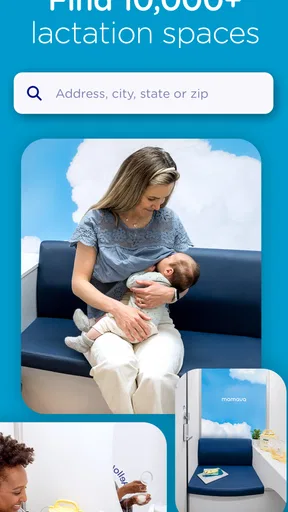
Finding a comfortable place to breastfeed or pump can turn a simple outing into a planning exercise. Mamava - Breastfeed on the Go is built for that exact problem: it helps parents locate lactation spaces, connect with support, and make feeding away from home feel less improvised. I found its focus refreshingly practical. It is not trying to replace a parenting journal, feeding tracker, or medical resource; it concentrates on the places and people that can make nursing or pumping outside the house easier.
The app comes from Mamava, Inc. and sits in the parenting category. It is free, available for Everyone, and has passed the one-hundred-thousand-install mark. That combination makes it easy to try without committing money, which matters when you are already testing several tools during the early months with a baby. My overall impression is positive, especially for parents who travel, commute, attend events, or simply dislike having to search blindly for a suitable space.
How the app feels in everyday use
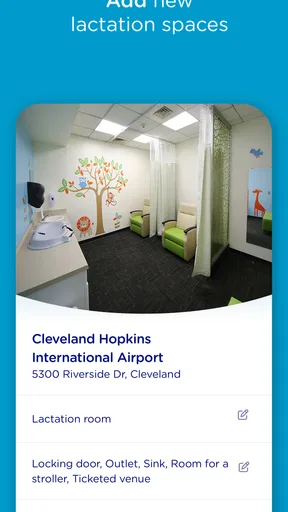
The most useful way to think about this app is as a location companion rather than a complete breastfeeding platform. When I imagine using it before leaving home, the first step is checking the destination and seeing whether a lactation space is nearby. That small amount of preparation can change the whole outing: instead of waiting until the baby is hungry and then asking staff where to go, I can identify a possible stop in advance.
That workflow is particularly valuable in unfamiliar places. A parent visiting another town, changing flights, attending a conference, or spending a day at a large venue has different needs from someone feeding at home. Ordinary map apps may show businesses and public facilities, but they do not necessarily make lactation spaces the central search task. Mamava keeps that purpose at the front, reducing the number of searches and guesses involved.
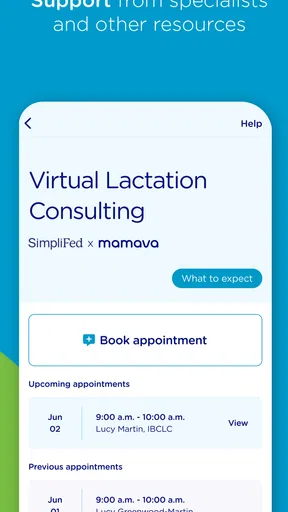
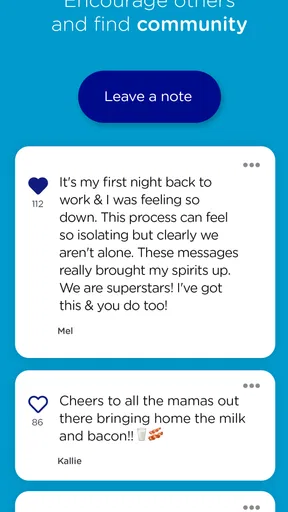
I also like that the app recognizes the social side of breastfeeding. The ability to get and give support makes it more than a directory. Feeding decisions can feel isolating, particularly when a parent is away from familiar friends or family. A focused community can provide reassurance and practical perspective, although I would still treat peer conversation as support rather than medical advice.
The experience is best when I use it as part of a routine. Before a trip, I would look for a nearby location, note a backup option, and then check again shortly before leaving. Once I arrive, I would use the app as a guide rather than assuming that every listed place will suit every situation. A dedicated room, a private pod, and a general nursing-friendly area can all be useful, but they do not offer the same level of comfort or accessibility.
A realistic day away from home
Imagine a parent spending the afternoon at a shopping center with a baby and a pump. The baby’s schedule is unpredictable, the parent has bags to carry, and returning home is not practical. With this app, the parent can search before arriving, identify a lactation space, and keep another nearby possibility in mind. If the first option is busy or inconvenient, the second search is faster than starting from nothing.
That scenario shows the app’s strongest benefit: it lowers mental load. The value is not just finding a room on a map. It is having one less problem to solve while tired, rushed, or carrying a baby. For pumping parents, the same planning can help protect time between activities. For nursing parents, it can make a long outing feel more manageable without forcing the whole day around feeding.
A useful tip is to search before the urgent moment arrives. I would not wait until a baby is already upset or a pumping break is overdue. Checking the route earlier gives me time to compare distance, think about accessibility, and decide whether I need a backup. That is a more reliable workflow than treating the app as an emergency button.
What makes it different from ordinary alternatives
Without a specialized tool, parents often rely on general map searches, venue websites, social media posts, or asking an employee on arrival. Those methods can work, but each has a weakness. A map search may return broad phrases rather than a useful lactation-focused result. A venue website may bury practical details. Social posts can be outdated or inconsistent. Asking staff may be uncomfortable when time is short.
Mamava’s advantage is its narrow purpose. It puts lactation spaces and parent support ahead of unrelated search results. That focus is more useful than a broad parenting app when the immediate question is, “Where can I feed or pump near this destination?” On the other hand, a general map app may still be better for planning the full journey, checking transit, estimating travel time, or finding nearby pharmacies and food. I would use Mamava for the feeding stop and another familiar navigation tool for the rest of the route.
It also differs from feeding trackers. A tracker can help record sessions, diapers, or pumping output, but it does not solve the location problem. Parents who want detailed personal records will need another app. That is not a flaw in this product’s central idea, but it is important to understand before installing it. Mamava is strongest when the challenge is access and confidence outside the home, not measurement or record keeping.
Community support with a practical purpose
The support element gives the app a human dimension. Parents may want encouragement, local knowledge, or a sense that they are not the only person trying to manage feeding in public. Giving support can also turn users into contributors rather than passive readers. Someone who has just found a comfortable space may be able to help another parent plan a similar outing.
I would approach community information thoughtfully. Experiences differ widely: one parent may find a location quiet and convenient, while another may need more room, a different chair, or better access for a stroller. Supportive comments can add context, but they should not be treated as guarantees. If a baby has feeding difficulties, a parent is recovering from a medical issue, or pumping is affected by a health concern, professional guidance remains the better source.
One non-obvious benefit of this community angle is that it can help parents build a personal shortlist. Rather than searching from scratch every time, I would keep track of locations that fit my own needs: places with easy parking, enough space for a stroller, or a calm environment for a distracted baby. The app becomes more valuable when I use it to shape my own practical map of trustworthy options.
What has changed and what that means today
The current version is 9.67.0, which shows that the product has continued through multiple rounds of development since its release on April 26, 2017. I see that evolution as important because a location-based parenting app depends on maintenance. Places open, relocate, change access arrangements, and receive updated community feedback. A product that remains active has a better chance of keeping its central directory and user experience useful than a one-time static guide.
At the same time, a version number alone does not tell me that every individual listing is current or that every improvement will matter equally to every parent. I would still verify important practical details when the destination is unfamiliar or the feeding break is essential. The app can reduce uncertainty, but it cannot remove the need for a quick reality check.
For existing users, the main effect of ongoing development is continuity. Someone who already depends on the app can keep it as part of a travel routine instead of replacing it with a new tool every few months. New users benefit from entering a product with an established history rather than an untested concept. The trade-off is that mature apps can also accumulate interface habits that feel less tailored to a particular phone or personal workflow.
The public response is encouraging but not overwhelming: the app holds a 4.0 average from roughly three hundred ratings, with more than one hundred fifty written reviews. I read that as a sign of real usefulness alongside room for disagreement. A location tool is naturally judged by region, travel patterns, and personal expectations, so one parent’s excellent experience may not translate directly to another’s.
Small habits that make the app more useful
My first recommendation is to plan two options whenever the outing matters. The closest location is not always the most convenient one. A slightly farther space may be easier to reach with a stroller, closer to the planned route, or better suited to pumping. Having a second possibility prevents a single unavailable location from disrupting the day.
Second, search by destination rather than only by current position. Looking around the place I am going gives me a clearer picture of the entire outing. I can decide whether a feeding break belongs before an appointment, during a shopping trip, or on the return journey. This is more useful than opening the app only after I have already reached the busiest part of the day.
Third, I would use community input as a prompt for questions. If a location looks promising, I would think about what matters to me before relying on it: privacy, space, ease of access, and whether I need a place for nursing, pumping, or both. This habit turns a simple listing into a more deliberate plan and helps avoid disappointment caused by assumptions.
Finally, I would keep the app alongside—not instead of—basic preparation. A charged phone, a backup feeding plan, and knowledge of the route still matter. The app is a useful layer of support, but parents should not feel that a missed listing means they have failed to prepare. Flexibility is part of feeding on the go.
Where the experience still has limits
The biggest limitation is that a directory cannot guarantee the exact experience on arrival. A location may be occupied, temporarily inaccessible, difficult to find inside a large building, or less comfortable than expected. That is a general challenge for any place-based service, but it matters more when the user is tired and working around a baby’s needs.
The app may also feel too narrow for parents looking for an all-in-one solution. It does not replace a feeding log, a pediatric information source, a general travel planner, or a private messaging service for family support. If my priority were tracking patterns or organizing medical questions, I would choose a different parenting tool and use Mamava only for location planning.
Another consideration is personal preference. Some parents are comfortable nursing wherever they feel safe and do not need a dedicated search. Others may live or travel in areas with few listed spaces, making the directory less helpful than expected. In those cases, a general map search, a venue’s own information desk, or a local parent group may provide more immediate answers.
Privacy is worth considering whenever community features are involved. I would avoid sharing unnecessary personal details and keep conversations focused on practical support. Parents should also remember that a supportive comment is not the same as a professional assessment. The app can help someone feel less alone, but it should not be the only resource for complex feeding concerns.
Who should use it, and who may want something else
I would recommend it to breastfeeding or pumping parents who spend meaningful time away from home, especially those navigating unfamiliar buildings, travel days, work schedules, or long errands. It is also useful for a partner or relative helping plan an outing, since the search can make the feeding stop part of the itinerary rather than leaving all the preparation to the nursing parent.
It is a particularly good fit for someone who values dedicated lactation spaces and wants a focused place to discover them. Parents who appreciate community knowledge may also get more from it than users who only want a map pin. The free price removes an important barrier to trying it, and the Everyone age classification makes it suitable for a broad family audience.
I would be less enthusiastic for someone seeking detailed breastfeeding education, clinical guidance, or automatic tracking. In those situations, a qualified health professional or a specialized tracking app is a better primary choice. I would also hesitate to make it the sole plan for a high-pressure trip where a missed location would create a serious problem. Use it to improve preparation, not to eliminate every backup.
What I would watch as the app continues
For future use, I would pay attention to how well the location information stays current and how clearly each place communicates practical differences. Parents need more than a nearby result; they need confidence that the option matches the situation. Continued attention to search clarity, community usefulness, and destination planning would have a direct effect on whether the app remains part of a regular routine.
I would also watch how the balance between discovery and support develops. The directory is the reason to open the app, while the community layer can determine whether I return. If both sides remain focused on real feeding situations rather than becoming cluttered with unrelated parenting content, the product should retain its identity.
After using it as a planning aid, I see Mamava as a practical companion with a clear purpose. It does not solve every parenting problem, and it cannot promise that every listed space will fit every family. What it does well is make an often-overlooked part of an outing easier to plan. For a parent who wants more confidence before leaving home, the strongest reason to try it is the reduction of last-minute searching.
My final recommendation is simple: install it if breastfeeding or pumping away from home is part of your life, explore the nearby options before you need them, and keep a backup plan for important trips. The app’s established development history, free access, and focused approach make it worth having on a phone, even if you use it only when traveling or visiting unfamiliar places. It is a specialized tool, and that specialization is exactly why it can be more helpful than a general parenting app at the moment you need a suitable lactation space.
Privacy and Permissions
See what permissions an app requests and how it handles your data.
- Calendar
- read calendar events plus confidential information, add or modify calendar events and send email to guests without owners' knowledge
- Location
- approximate location (network-based), precise location (GPS and network-based)
- Photos/Media/Files
- read the contents of your USB storage, modify or delete the contents of your USB storage
- Storage
- read the contents of your USB storage, modify or delete the contents of your USB storage
- Camera
- take pictures and videos
- Wi-Fi connection information
- view Wi-Fi connections
- Other
- view network connections, pair with Bluetooth devices, access Bluetooth settings, full network access, change your audio settings, control vibration, prevent device from sleeping, read Google service configuration
Verdict
Strengths of Mamava - Breastfeed on the Go
- Locator helps find nearby Mamava lactation pods quickly.
- Provides directions and location details for planning ahead.
- Useful for nursing, pumping, and feeding while traveling.
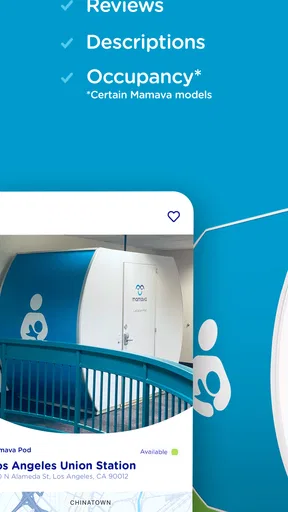
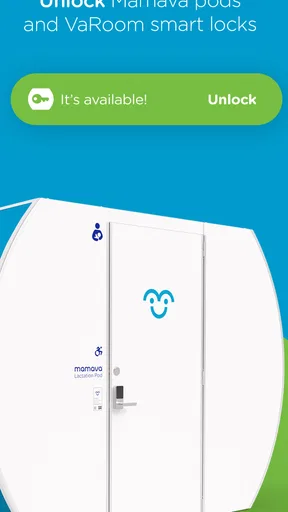
- Pod information can help users check availability before arrival.
- Clean, private spaces may make breastfeeding more comfortable.
Limitations of Mamava - Breastfeed on the Go
- Coverage is limited because Mamava pods are not available everywhere.
- Location details may change if a pod is moved or temporarily closed.
- Some facilities may require building access or have restricted hours.
- The app is less useful in areas without nearby Mamava pods.
- Availability information may not always reflect real-time occupancy.
Similar Picks in This Category
View All
Family Space
Motorola Mobility LLC.3.9

شرطة الأطفال - مكالمة وهمية
Oub Apps4.1

Findmykids: Parental Control
LETEM LTD4.6

Pregnancy + | Tracker App
Philips Electronics UK Limited4.8

Policía de niños - para padres
Kids police4.7

Pregnancy App
Amila4.9
Frequently Asked Questions
What is Mamava - Breastfeed on the Go used for?
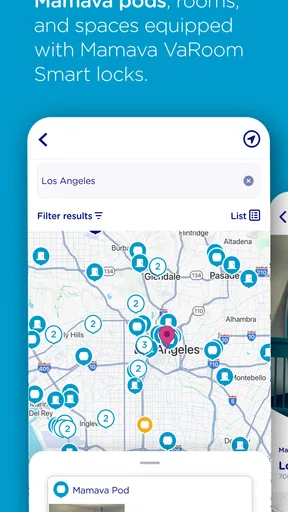
Mamava - Breastfeed on the Go helps breastfeeding and pumping parents find lactation spaces in public places. The app provides a searchable map of Mamava lactation pods and other breastfeeding-friendly locations, along with details such as addresses, opening information, photos, and available amenities. It is designed to make planning feeding breaks easier while traveling, commuting, shopping, or spending time away from home.
How can I find a nearby Mamava lactation pod or nursing location?
After opening the app, you can use your current location or search a city, address, venue, or destination manually. The map displays nearby Mamava pods and participating lactation-friendly spaces, while list and filter options can help narrow the results. Before visiting, review the location details and confirm access information, since availability, building hours, and entry requirements may vary.
Does Mamava - Breastfeed on the Go provide directions and location details?
Yes. The app is intended to help you identify suitable places and plan how to reach them. Depending on the listing, you may see the exact address, venue information, photos, amenities, and access notes. You can generally use the location information with your preferred navigation service. It is still wise to check the destination’s hours and accessibility before relying on it.
Is Mamava - Breastfeed on the Go free to download and use?
The app is generally available as a free download, allowing users to browse lactation locations and access its core discovery features. However, app availability, optional features, and any in-app requirements can change with updates or by region. The locations shown in the app may also be inside venues that have their own opening hours, security procedures, or access restrictions.
Can I use the app when traveling, and are all listed locations guaranteed to be available?
Mamava - Breastfeed on the Go can be useful for preparing feeding stops during local trips or longer journeys, because it lets you search beyond your immediate area. Nevertheless, listings should be treated as helpful guidance rather than a guarantee. A pod may be temporarily unavailable, relocated, occupied, or inaccessible outside a building’s operating hours, so verify important details before traveling.
